
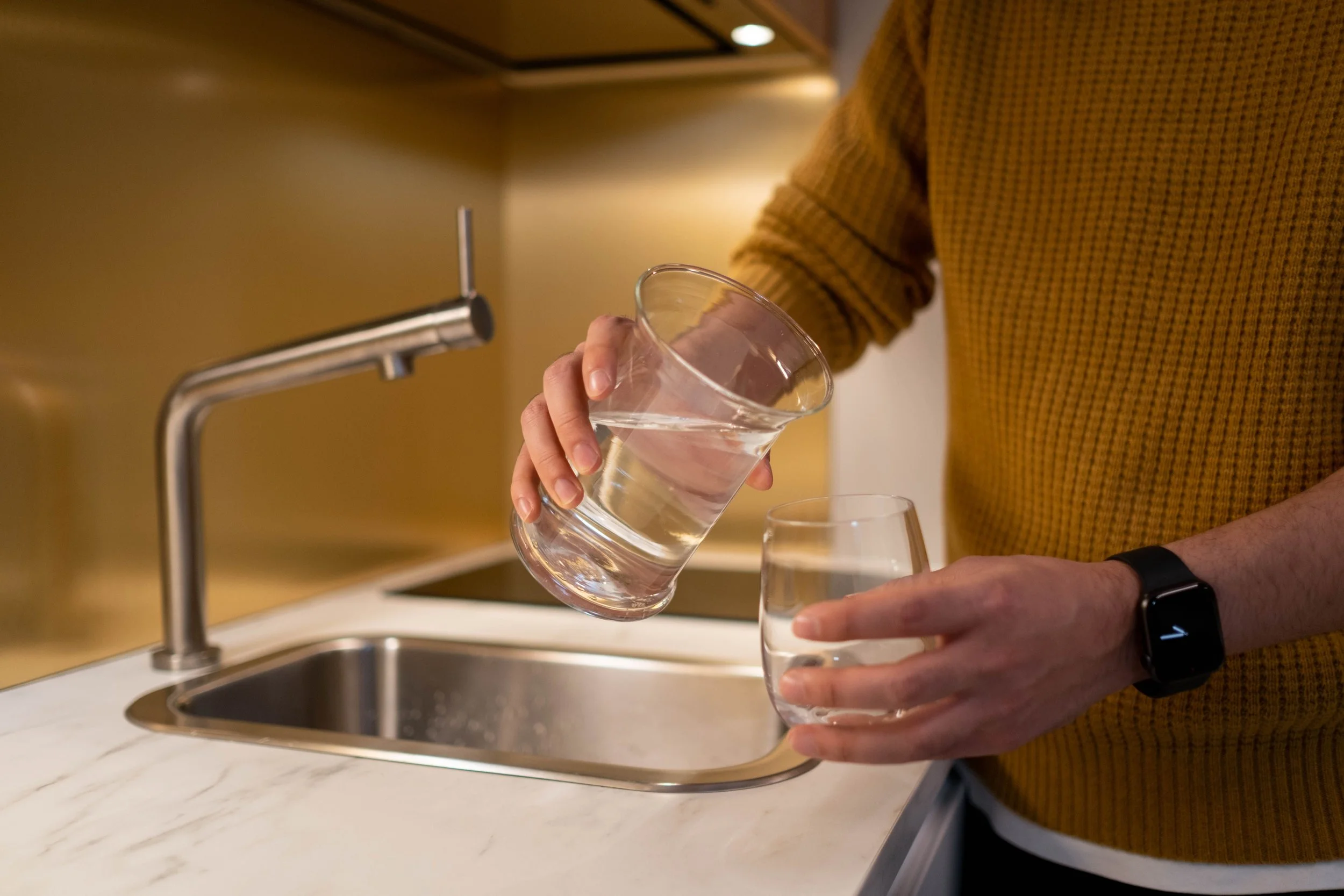
Perth tap water flowing from kitchen faucet
You turn on your kitchen tap and fill a glass. By Australian standards, that water is completely safe. It meets every health requirement, and you can drink it without a second thought.
But by evening, you smell chlorine in your hot shower. By morning, white scale builds up on your tap aerators again. Your skin feels tight after washing, and your kettle needs descaling for the third time this month.
The water is safe - but safe doesn't mean ideal.
Is Perth Tap Water Safe to Drink?
When people ask if Perth tap water is safe to drink, the short answer is yes. The Water Corporation tests our supply regularly and thoroughly, ensuring it meets every safety requirement under the Australian Drinking Water Guidelines. Bacteria are controlled, heavy metals remain within strict limits, and pathogens are constantly monitored. You won't get sick from drinking it.
However, most Perth homeowners eventually realise there’s a gap between health standards and household comfort. Safety guidelines focus purely on preventing illness, not on protecting your skin or your home's infrastructure. Water can meet every health threshold and still contain enough chemicals and minerals to irritate your skin, ruin your shower glass, and shorten the lifespan of your hot water system.
This is what most people don’t notice until they’ve lived with Perth’s tap water quality standards for a few months.
What Your Tap Water Contains (That You Should Know About)
Even safe municipal water carries additives and minerals that affect your home and daily comfort:
Chlorine and Chloramines (0.5 to 1.0 mg/L): Added during municipal treatment to disinfect water during distribution, these chemicals do a brilliant job protecting public health. But they also create that unmistakable "swimming pool" smell - especially in hot showers, where heat vaporizes the chlorine into steam. It strips natural oils from skin and hair, leaving you with dry, itchy skin after bathing.
Hard Water Minerals (120–200+ mg/L): Perth’s supply is packed with dissolved calcium and magnesium. While the recommended ideal for water hardness in Perth sits around 60 mg/L, most suburbs run double or triple that amount depending on the season and source. While hard water in Perth poses no health risk, it bakes onto shower screens within weeks, clogs tap aerators, and drastically reduces hot water system efficiency. Over 5 to 10 years, it can cost thousands in premature appliance replacements.
Total Dissolved Solids (600–900 mg/L): All those dissolved minerals and salts add up. High TDS levels can give tap water a heavy or "flat" taste, accelerate scale buildup inside internal plumbing, and force appliances like dishwashers and coffee machines to work significantly harder.
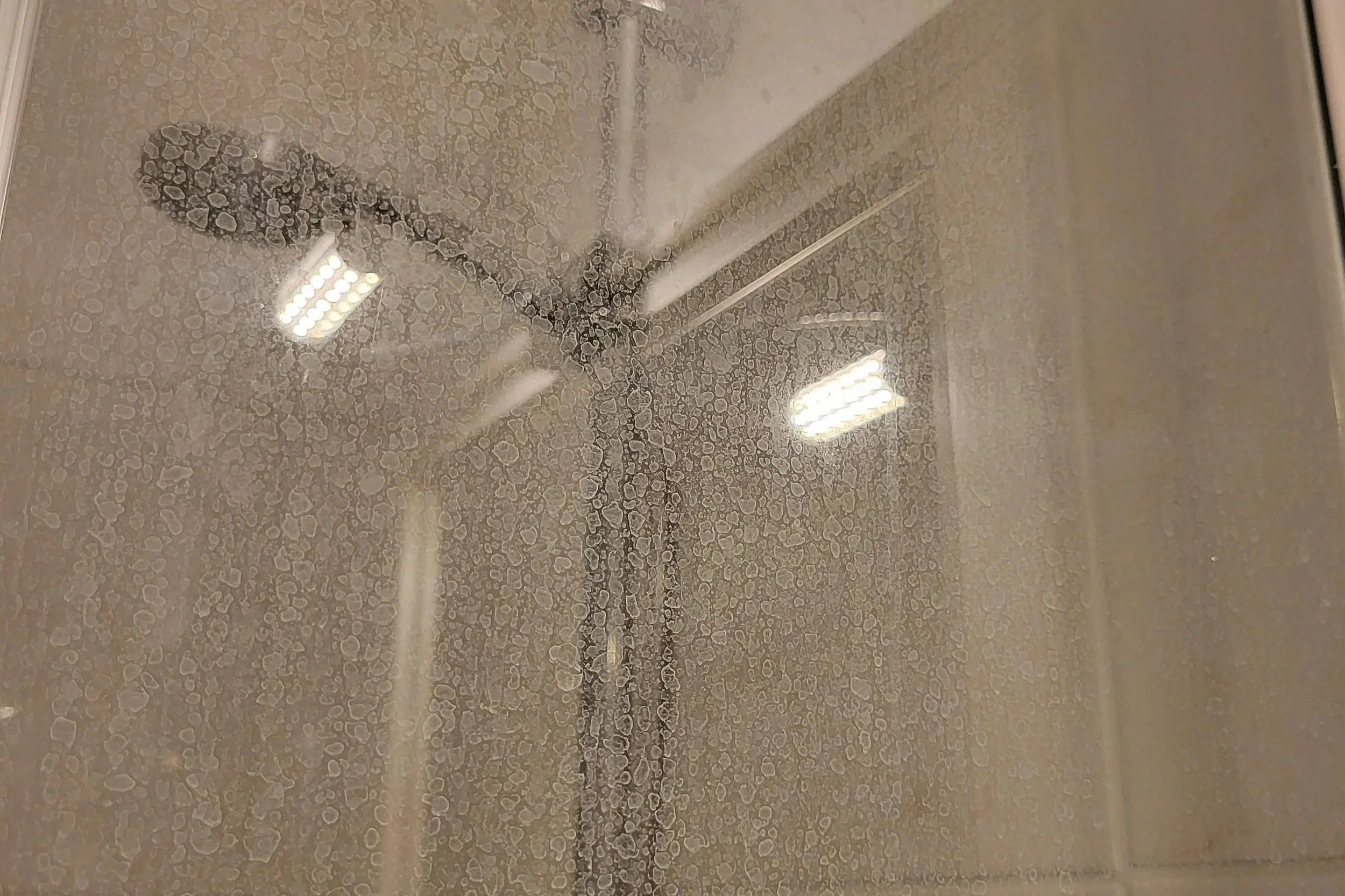
White mineral scale deposits on Perth home shower screen from hard water minerals
Should You Be Concerned About Perth’s Tap Water Standards?
From a health perspective, no. The water meets the Australian Drinking Water Guidelines and is safe to drink as-is.
However, if you're tired of smelling chlorine in the shower, constantly scrubbing limescale off fixtures, or watching your hot water system lose efficiency, filtration is the logical next step. Filtering your water isn’t an emergency health response - it’s about daily comfort, protecting your appliances, and saving money on long-term home maintenance.
A quality 3-stage whole-house system uses high-density carbon blocks to strip out chlorine and chloramines, while anti-scale media manages mineral buildup throughout your entire property. The result is simple: clean drinking water from every tap, softer skin in the shower, and appliances that actually last their full lifespan.
For a full run down on Perth Water Health, you can read our full guide here.
Related Reading on Perth Water
Learn more about managing your Perth tap water quality:
Contact Us Today
Frequently Asked Questions About Perth Tap Water
-
Yes. Perth’s mains water meets the Australian Drinking Water Guidelines for health and safety, making it safe for babies, children, and pets to consume. However, many parents prefer filtering out the added chlorine and chloramines to eliminate harsh chemical odors and improve the taste for infants.
-
The Water Corporation adds chlorine and chloramines to disinfect mains water as it travels through hundreds of kilometers of underground pipes. The smell is especially noticeable during hot showers because heat turns chlorine into a volatile vapor, filling the bathroom with a distinct chemical or "swimming pool" smell.
-
Boiling tap water kills biological pathogens, but because Perth's water is already microbiologically safe, boiling isn't necessary for health. Furthermore, boiling does not remove hard water minerals like calcium and magnesium - in fact, as steam evaporates, it concentrates those minerals, making the remaining water even harder and causing scale inside your kettle.
-
Perth has some of the hardest water of any Australian capital city. While ideal drinking water hardness sits around 60 mg/L, Perth's supply frequently ranges between 120 mg/L and 200+ mg/L depending on your suburb and whether your supply comes from underground aquifers or desalinated seawater.
-
A quality 3-stage whole-house filtration system equipped with high-density carbon and anti-scale conditioning media targets hard water minerals, preventing them from forming stubborn, concrete-like scale on shower glass, tapware, and heating elements. It treats every tap in your home without stripping away beneficial trace minerals like a reverse osmosis unit would.
