
What Is Hard Water? Hard vs Soft Water & How To Check
If you've ever noticed chalky white spots on your glassware, dry skin after a shower, or soap that just won't lather properly, you've likely already met hard water firsthand. But what is hard water, exactly, and how does it differ from the soft water many households prize? Understanding hard water vs soft water isn't just useful trivia it affects your plumbing, your appliances, your skin and hair, and even the taste of your tap water. In this guide, we break down what hard water is, how it compares with soft water, the effects it has around the home, and the simplest ways to check the hardness of your own water supply.
What is hard vs soft water?
Hard Water vs Soft Water: Quick Comparison
The table below gives you a fast overview before we go into more detail on each point.
| Hard Water | Soft Water |
|---|---|
| High calcium and magnesium content | Low mineral content |
| Reduces soap and shampoo lather | Lathers easily |
| Can leave spots on dishes and glassware | Rinses clean, few spots |
| May cause limescale in pipes, kettles and hot water systems | Little to no scale buildup |
| Common in areas with limestone, chalk or gypsum geology | Common in areas with granite or sandstone geology |
As with any comparison, no single row tells the whole story. The right way to think about hard water vs soft water is to look at mineral content, the practical effects around the home, and how easy the water is to test which is exactly what we cover next.
What Is Hard Water?
The hard water meaning comes down to mineral content. Water is classified as “hard” when it carries higher than average levels of dissolved calcium and magnesium, picked up as it travels through rock and soil particularly limestone, chalk and gypsum deposits before reaching the tap or a household bore.
These minerals aren't harmful to drink in the concentrations found in household water, but they do change how the water behaves. Hard water is less able to dissolve soap efficiently, tends to leave mineral deposits behind as it evaporates, and can gradually build up limescale inside pipes, kettles and hot water systems.
Water hardness is usually measured in milligrams per litre of calcium carbonate equivalent (mg/L, sometimes written as ppm) or in grains per gallon (gpg). The higher the number, the harder the water.
Hard water image visualisation
What Is Soft Water?
Soft water is water with a low concentration of dissolved calcium and magnesium. It occurs naturally in areas where water travels through rock types such as granite or sandstone that don't readily release these minerals, and it can also be produced artificially using a water softener, which exchanges calcium and magnesium for sodium or potassium ions.
Soft water generally lathers more easily with soap and shampoo, rinses away more completely, and is less likely to leave scale behind in plumbing and appliances. Some people notice a slightly slippery feel to soft water, which is simply the result of soap and skin oils not being stripped away by dissolved minerals.
Soft water visualisation
Hard Water vs Soft Water: Key Differences
Beyond the basic definitions, there are a handful of practical differences worth understanding before you decide whether your water and your household would benefit from softening.
1. Mineral Content
| Hard Water | Soft Water |
|---|---|
| High calcium and magnesium, often above 60 mg/L | Low mineral content, typically below 60 mg/L |
2. Taste and Smell
| Hard Water | Soft Water |
|---|---|
| Can taste slightly mineral or metallic | Usually tastes smoother and more neutral |
3. Effect on Skin and Hair
| Hard Water | Soft Water |
|---|---|
| Minerals can interfere with rinsing, leaving skin dry and hair looking dull | Rinses more completely, often leaving skin and hair feeling softer |
5. Effect on Appliances and Plumbing
| Hard Water | Soft Water |
|---|---|
| Can cause limescale buildup in kettles, pipes and hot water systems over time | Reduces scale buildup, which can help extend appliance lifespan |
How Hard Is Too Hard? The Water Hardness Scale
Water hardness sits on a scale rather than being a simple yes-or-no. The table below shows the general classifications used across the water industry.
| Classification | Grains per Gallon (gpg) | mg/L (ppm) |
|---|---|---|
| Soft | Less than 1 | Less than 17.1 |
| Slightly Hard | 1 – 3.5 | 17.1 – 60 |
| Moderately Hard | 3.5 – 7 | 60 – 120 |
| Hard | 7 – 10.5 | 120 – 180 |
| Very Hard | Above 10.5 | Above 180 |
Most households don't need to know their exact number to notice the effects but if you're comparing water treatment options, this scale is what suppliers and test kits will refer to.
Hard Water Australia: Where Is It Most Common?
Water hardness varies significantly by region, largely depending on the geology the water passes through before it reaches your home. Areas with limestone, chalk or gypsum-rich groundwater including parts of South Australia, Western Australia and regional Queensland tend to report harder water, while areas drawing from granite or sandstone catchments, such as much of Sydney's supply, are typically softer.
Bore and well water is also more likely to be hard than mains-supplied water, since it travels directly through mineral-rich rock rather than being sourced from surface catchments. If you're on tank, bore or well water, it's worth testing rather than assuming your hardness matches your region's general reputation.
Signs You Might Have Hard Water
A few everyday clues are usually enough to suspect hard water before you even test it:
● White, chalky spots or streaks on glasses, dishes and shower screens
● Soap and shampoo that don't lather as easily as expected
● A filmy residue left on skin after washing, or hair that feels dull or straw-like
● Visible scale buildup around tap fittings, showerheads and kettle elements
● Laundry that feels stiff or looks slightly grey or faded over time
● Reduced water flow in pipes or appliances due to internal scale buildup
How Do You Know If You Have Hard Water?
Spotting the signs above is a good starting point, but they can be subtle or easy to put down to other causes. The only way to know for certain and to know how hard your water actually is is to test it directly, which is where a simple hardness check comes in.
How To Check Water Hardness
There are a few practical ways to check the hardness of your water, ranging from free and immediate to more precise lab-based results.
Test Strips
Inexpensive dip-and-read strips change colour based on mineral concentration and give you a result within seconds. They're widely available online and from hardware stores and are a good first step for most households.
The Soap Lather Test
Shake a small amount of pure liquid soap with water in a clear bottle. Hard water produces little foam and a cloudy appearance, while soft water produces a fuller, longer-lasting lather with clearer water underneath.
Ask Your Water Provider
If you're on mains water, your local water utility typically publishes an annual water quality report that includes an average hardness figure for your area. This won't account for older internal plumbing but gives a reliable baseline.
Professional or Lab Testing
For the most accurate figure particularly important for bore, well or tank water a water sample can be sent to a laboratory or tested on-site by a water treatment professional, giving you an exact mg/L or gpg reading.
Is Hard Water Safe to Drink?
Generally, yes. Hard water is not considered a health risk, and the calcium and magnesium it contains are the same minerals found in many foods. The concerns with hard water are almost entirely practical taste, appliance scaling, and the extra effort needed for cleaning rather than a matter of safety. Anyone with specific health or dietary concerns about mineral intake should speak with their doctor.
Hard Water vs Soft Water: Which Is Better for Your Home?
Neither is inherently “better” it depends on what you're optimising for. Hard water is perfectly safe and some people prefer its taste, but over time it can mean more cleaning, more scale in appliances and shorter appliance lifespans. Soft water is gentler on plumbing, fixtures and skin, but adds ongoing maintenance if it's produced by a softener, and softened water isn't always recommended for garden irrigation due to its sodium content.
If testing shows your water falls into the “hard” or “very hard” range and you’re noticing the practical effects around your home, that’s generally when households start looking into whole-home water filtration or softening options. The right approach depends on your water quality and what you want to improve, so it’s worth comparing the available water filtration systems before deciding what suits your home.
Below are our in-house, Australian-made systems, fully certified and designed to filter water down to an ultra-fine 0.2 micron level, delivering exceptionally clean, “soft”, water with one of the highest levels of filtration available for Australian homes.


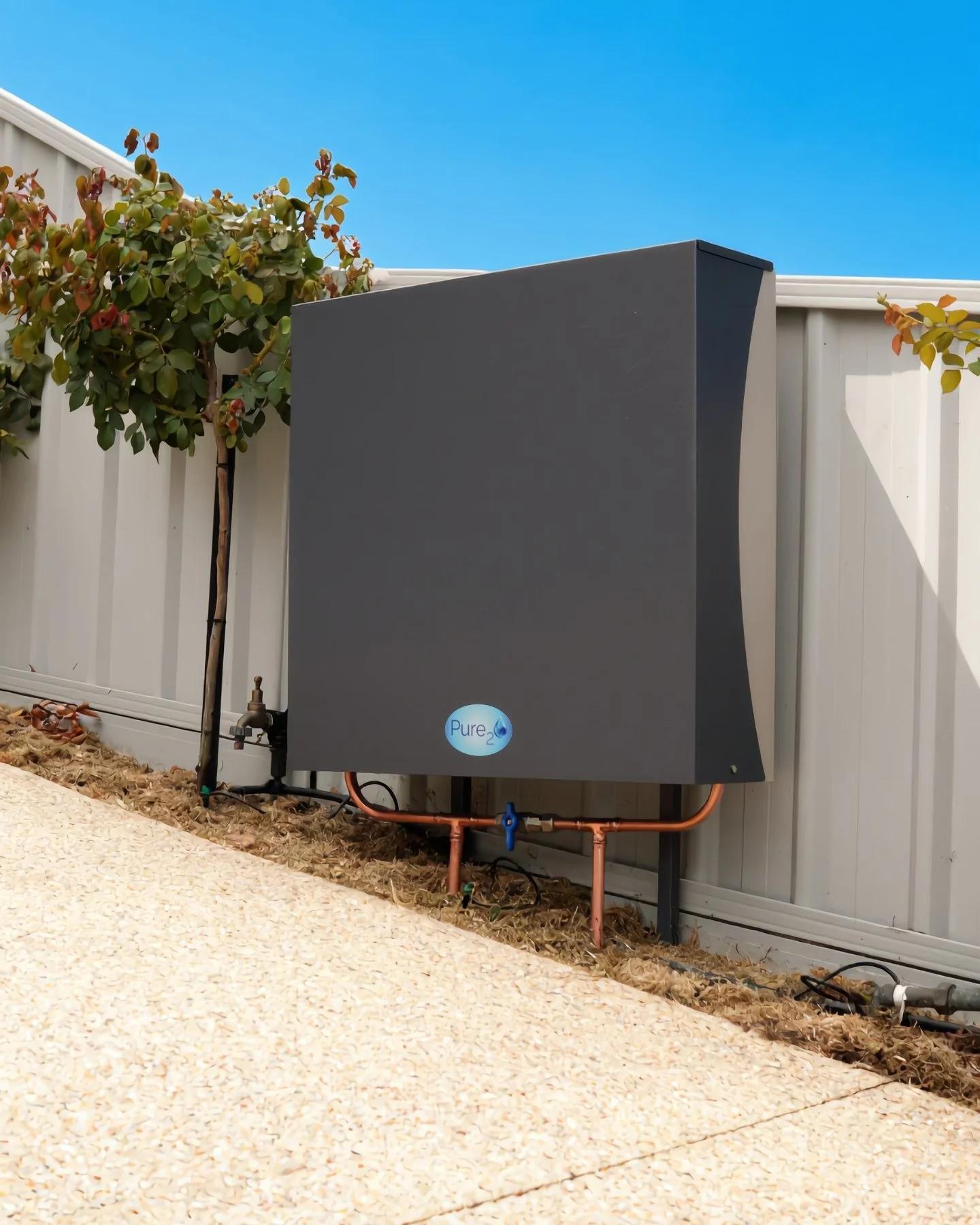
$2,695 (Supply Only - Australia-Wide)
Please enquire here if you require a supply & installation quote.
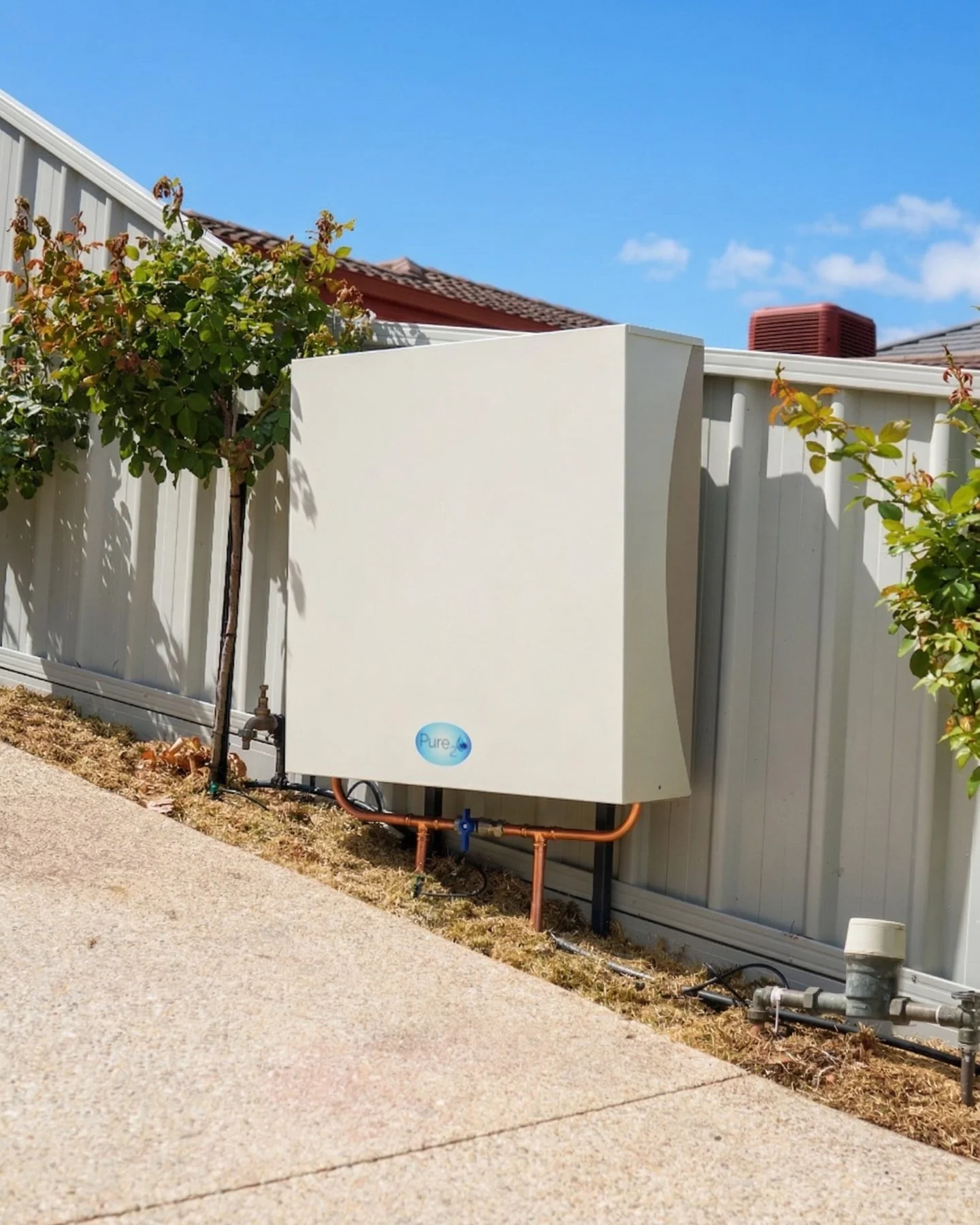
About The Pure₂O EnduraWall™ - Ironstone
Delivered Australia-wide. An upgraded enclosure for the Pure₂O whole-home filtration system, finished in Ironstone. The EnduraWall is built for the elements - a fully enclosed, double powder-coated stainless steel cabinet that hides all pipework for a clean, modern, and uniquely Australian look. Tamper-resistant and weatherproof, it protects all filtration components from Australia’s harsh sun, sand, and wind.
What’s Included:
Full Home Water Filtration System
Standard Three-Stage Whole House Filter Set | 20” x 4.5”
Free Delivery Australia-Wide
Filter Options
Standard Three-Stage Whole House Filter Set | 20" x 4.5" - removes sediment and reduces chlorine taste and odour (1 micron sediment, 1 micron carbon block, 0.5 micron polish).
Premium Three-Stage PFAS Whole House Filter Set | 20" × 4.5" - adds chloramine and PFAS reduction with upgraded filter media (1 micron nano silver sediment, 0.5 micron catalytic carbon, 0.2 micron polish).
Installation:
Enquire with our team to get a quote for a full installation (Greater Perth only)
- Live elsewhere? - Ask us about our recommended licensed plumber installers in your area
Product Specs:
Fully enclosed system - hides all pipework
Double powder-coated Stainless Steel
Available finish: Ironstone
Heavy-duty 20” Big Blue canisters - high-flow, food-grade and BPA-free
Three pressure gauges for easy maintenance
Tamper-resistant
WaterMark Certified
Compatible with all standard 20” x 4.5” filters
High-flow performance up to 75 L/m
$2,695 (Supply Only - Australia-Wide)
Please enquire here if you require a supply & installation quote.
About The Pure₂O EnduraWall™ - Surf Mist
Delivered Australia-Wide. An upgraded enclosure for the Pure₂O whole-home filtration system, finished in Surf Mist. The EnduraWall is built for the elements - a fully enclosed, double powder-coated stainless steel cabinet that hides all pipework for a clean, modern, and uniquely Australian look. Tamper-resistant and weatherproof, it protects all filtration components from Australia’s harsh sun, sand, and wind.
What’s Included:
Full Home Water Filtration System
Standard Three-Stage Whole House Filter Set | 20” x 4.5”
Filter Options
Standard Three-Stage Whole House Filter Set | 20" x 4.5" - removes sediment and reduces chlorine taste and odour (1 micron sediment, 1 micron carbon block, 0.5 micron polish).
Premium Three-Stage PFAS Whole House Filter Set | 20" × 4.5" - adds chloramine and PFAS reduction with upgraded filter media (1 micron nano silver sediment, 0.5 micron catalytic carbon, 0.2 micron polish).
Installation:
Enquire with our team to get a quote for a full installation (Greater Perth only)
- Live elsewhere? - Ask us about our recommended licensed plumber installers in your area
Product Specs:
Fully enclosed system - hides all pipework
Double powder-coated Stainless Steel
Available finish: Surf Mist
Heavy-duty 20” Big Blue canisters - high-flow, food-grade and BPA-free
Three pressure gauges for easy maintenance
Tamper-resistant
WaterMark Certified
Compatible with all standard 20” x 4.5” filters
High-flow performance up to 75 L/min
What Is Hard Water, and What Is the Difference Between Hard Water and Soft Water?
Hard water is water with a higher-than-average concentration of dissolved calcium and magnesium, picked up as it passes through rock such as limestone, chalk or gypsum. It's not a health concern, but it can affect taste, soap lather and appliance scaling.
The main difference is mineral content. Hard water contains higher levels of calcium and magnesium, which reduce soap lather and can cause limescale, while soft water has low mineral content, lathers more easily and leaves little to no scale behind.
How Can I Tell If My Water Is Hard?
Common signs include spots on dishes and glassware, reduced soap lather, dry skin or dull hair after washing, and visible limescale around taps and appliances. For a definite answer, use a test strip, the soap lather test, or check your water provider's published hardness figures.
Is Hard Water Bad for You?
No. Hard water is considered safe to drink, and the calcium and magnesium it contains are the same minerals found in many everyday foods. Its downsides are practical rather than health-related.
Can You Soften Hard Water at Home?
Yes. Water softeners, typically using ion exchange to swap calcium and magnesium for sodium or potassium, are the most common household solution. Some whole home filtration systems also include anti-scale media, though this isn't identical to full water softening.
Does Australia Have Hard or Soft Water?
It varies by region. Areas with limestone, chalk or gypsum geology including parts of South Australia, Western Australia and regional Queensland tend to have harder water, while catchments drawing from granite or sandstone are generally softer. Bore, well and tank water are also more likely to be hard than mains supply.
Looking For A Whole House System to Soften Your Water?
Submit the form below to speak with our team about the best solutions for your home.
